
Diamond news moved quickly this week. Hong Kong’s biggest September jewelry fair closed, the natural diamond industry’s marketing body took on a new name, and trade leaders spoke plainly about how natural and laboratory-grown diamonds should be described. If you are browsing K Gold’s diamond rings this season, these headlines explain a lot about what you will see in store.
We have gathered the stories that matter to jewelry buyers, not just the trade, and added what each one means when you are choosing a piece. For the shapes mentioned below, our guide to round, oval, pear and emerald diamonds is a helpful companion.
1. Pear and Oval Diamonds Led Demand at the Hong Kong Fair
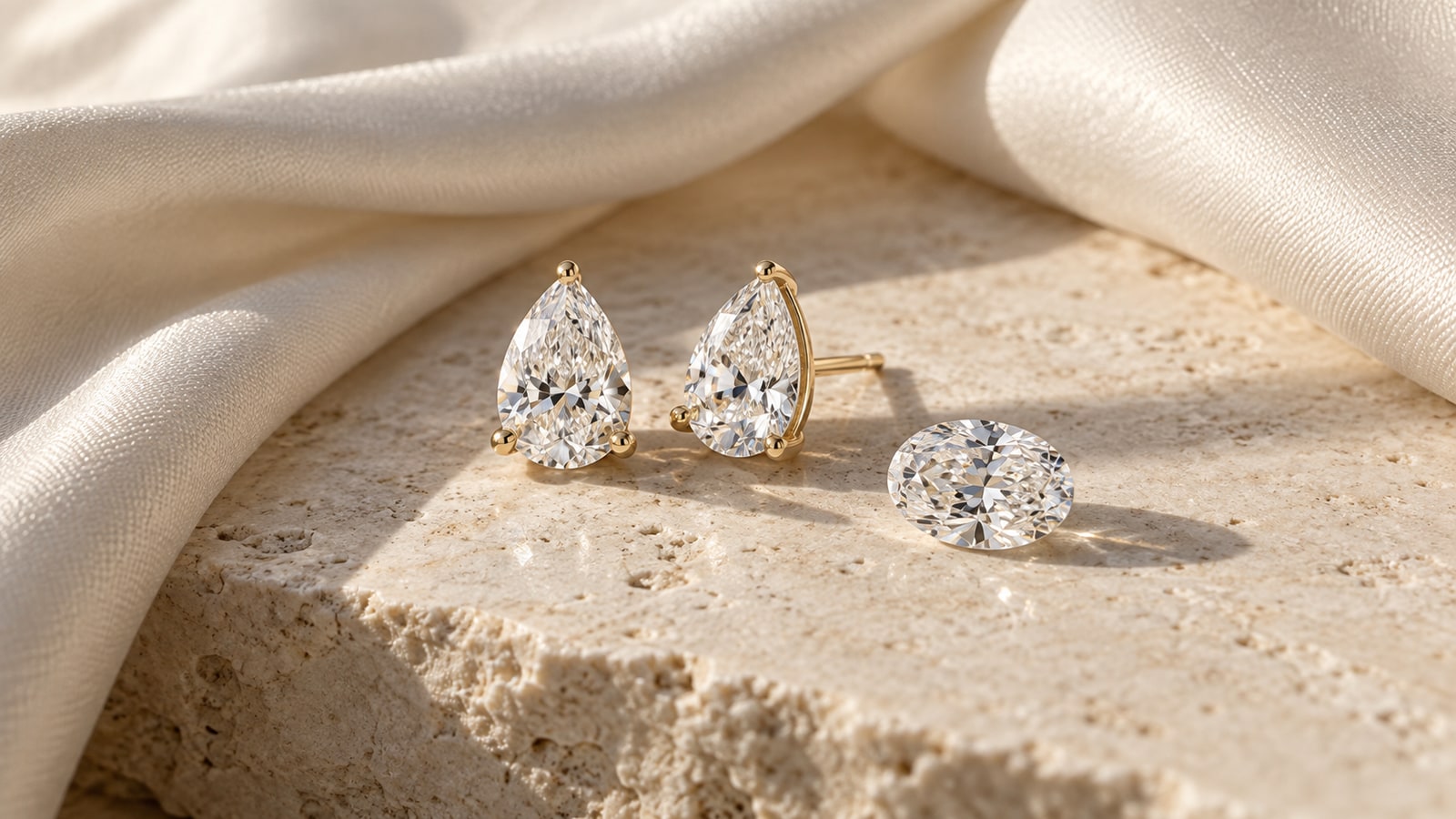
Jewellery & Gem World Hong Kong ran from September 14 to 20 and welcomed 57,632 buyers from 149 countries, according to JNA’s report on the fair. Exhibitors named fancy shapes, especially pears and ovals, among the strongest diamond requests. One supplier connected the interest to celebrities wearing pear-shaped diamonds as stud earrings.
Rapaport’s September 24 market comment added that long ovals, marquises and emerald cuts in larger sizes sold well, while round diamonds remained the steadiest shape overall.
What it means for you: Elongated shapes are having a real moment, not just a social media one. A pear or oval can look longer on the finger or ear than a round stone of similar weight. If you love a classic look, rounds remain a dependable choice. Compare both on your own hand or ear before deciding.
2. Natural and Lab-Grown Diamonds: “Distinct Categories”
Speaking at the Hong Kong fair on September 23, World Federation of Diamond Bourses president Mehul Shah said natural and laboratory-grown diamonds should be treated as separate categories rather than simple competitors, Rapaport reported. He called for clear identification of the diamond type on invoices, certificates and marketing, including in local languages.
The same market comment noted that laboratory-grown diamonds drew similar visitor traffic to natural stones at the show, and continued to affect demand for smaller natural diamonds.
What it means for you: Both are real diamonds in their physical makeup. They differ in origin, and that difference should always be clearly stated. Before buying, ask directly whether a stone is natural or laboratory-grown, and check that the answer appears on your receipt and any grading report. A trustworthy jeweler will welcome the question.
3. The Natural Diamond Council Is Now “The Diamond Collective”
On September 23, the Natural Diamond Council announced a new name, The Diamond Collective, and a consumer-focused strategy, JNA reported. Plans include a legally protected trustmark to help shoppers recognize natural diamonds, fashion partnerships from next year, and a Diamond Desire Index that will track how Gen Z and millennial shoppers in the US, India and China feel about diamonds.
What it means for you: Expect clearer labeling and more diamond storytelling in fashion over the coming year. A recognizable mark could make it simpler to confirm what you are buying. Until then, the grading report and your jeweler’s written description remain your best guide.
4. Lighter Gold Designs and Colorful Gems Are Gaining Ground
JNA’s fair report also highlighted interest in handcrafted 18-karat gold jewelry, particularly lighter-weight designs that still look substantial. Among colored stones, buyers sought Paraíba tourmaline, red and hot-pink spinel, and fancy colored diamonds in yellow, pink and blue.
What it means for you: You do not need a heavy piece to make a statement. Hollow-look profiles, open settings and clever construction can give a bold silhouette that stays comfortable all day. A touch of color also pairs well with white diamonds. Our mixed-metal ring stacking guide shows how to combine different tones without the look feeling busy.
5. The Holiday Season Is Expected to Be Strong
Mastercard expects US holiday retail sales from November 1 to December 24 to rise about 6 percent, the strongest increase in four years, according to Rapaport. JNA described buyers at the Hong Kong fair as stocking up ahead of the season.
What it means for you: If you have a gift, proposal or anniversary planned for December, start looking early. You will have more time to compare designs, ask for sizing and allow for any custom work without a last-minute rush.
How to Shop With This Week’s News in Mind
- Try an elongated shape: Place a pear or oval next to a round of similar size and notice how each one looks on you.
- Ask about origin: Confirm whether each diamond is natural or laboratory-grown, and make sure it is written down.
- Look at the setting, not only the stone: Lighter gold construction can offer a bold look with everyday comfort.
- Plan holiday gifts now: Early shopping leaves room for sizing and thoughtful comparison.
Diamond News: Your Questions Answered
Are pear-shaped diamond studs a lasting style?
Pear studs have a graceful, slightly unexpected shape that suits both everyday and evening outfits. Current demand is strong, but the best reason to choose them is that you enjoy how they look. Our stud earring guide explains how to compare settings and backs.
Is a laboratory-grown diamond a real diamond?
Yes. Laboratory-grown diamonds share the physical and chemical properties of natural diamonds but are created in a laboratory rather than formed in the earth. The key point is clear disclosure, so you always know which one you are buying.
What does The Diamond Collective change for shoppers today?
Nothing changes immediately. The new name and plans point toward clearer natural diamond labeling and more fashion-led campaigns over the next year. For now, rely on grading reports and clear written descriptions from your jeweler.
Find a Diamond That Feels Like You
Trends are a useful starting point, but the right piece is the one you will love wearing. Explore K Gold’s diamond stud earrings and diamond rings, or contact the K Gold team with questions about a specific design.